
The New Metrics of Transformation: What CEOs Should Actually Measure
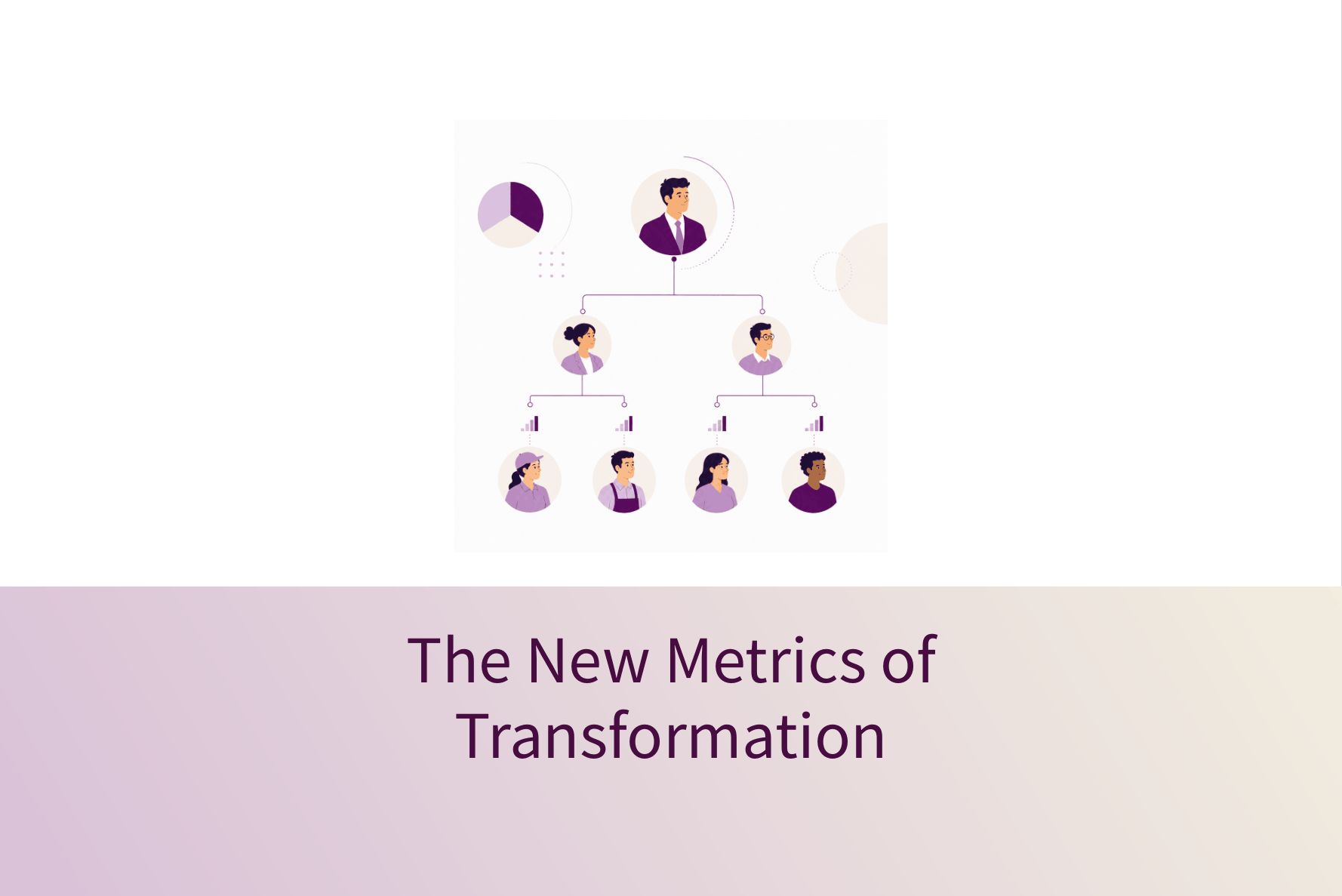
Your company is investing in transformation for a reason.You may be introducing AI, changing your operating model, restructuring the organization, developing new capabilities, or preparing the business for a rapidly changing market.
But transformation only matters if it delivers business results. It needs to improve profitability.It needs to generate a return on investment.It needs to strengthen competitiveness.And it needs to keep your company relevant to customers whose expectations continue to change. For CEOs, this creates a fundamental question:
Is your transformation actually changing how your organization performs? Too many transformation dashboards measure activity rather than impact.They track milestones, training completion, system launches, workshops, and communication campaigns.All of these may be necessary, but they do not prove that your transformation is working. Your company can implement a new technology while employees continue working in the old way.You can communicate a new strategy while frontline leaders struggle to translate it into action.You can deliver a learning program with high completion rates while very little changes in daily behavior. Implementation is not the same as adoption. And without adoption, your expected business ROI is at risk.
Measure the path from strategy to profitability
Your transformation metrics should start with the business case. What economic outcome should your transformation create? For example:
- Revenue growth from new products, markets, or customer segments.
- Higher profitability and improved margins.
- Lower operating costs.
- Greater employee productivity.
- Faster decision-making and execution.
- Higher customer retention and lifetime value.
- Faster adoption of AI, technology, or new processes.
- Stronger market position and future competitiveness.
These are the outcomes that ultimately matter. But financial results are often lagging indicators.By the time declining margins, productivity, or customer metrics reveal a problem, your transformation may already be months behind expectations. That is why CEOs also need to measure what happens between strategy and financial performance.
1. Measure frontline adoption
Your strategy only creates value when employees behave differently because of it. Ask whether your frontline leaders understand the transformation, believe in the direction, can explain it to their teams, and know what they need to do differently.
Measure where resistance is emerging.Where is understanding weak?Which teams are moving quickly?Which parts of the organization are struggling to translate strategy into execution? This is particularly important for your learning program. Training completion is not a business outcome.Your learning program should help leaders apply new capabilities directly to the transformation your company is implementing.
2. Measure execution speed
In a fast-changing market, execution speed is a competitive advantage. How quickly does an executive decision reach the frontline?How quickly can teams translate a new strategic priority into action?How rapidly can your organization respond to changing customer expectations, technology, competitors, or market conditions? A successful transformation should make your company better at executing change, not simply deliver another project.
3. Measure customer impact
Your customers experience the real outcome of your transformation. They do not care how many transformation workshops were completed.They care whether your company became easier to work with, faster, more innovative, more responsive, and more valuable to them. Depending on your strategy, measure customer retention, satisfaction, adoption of new products, service speed, revenue per customer, customer lifetime value, and market share. If customers cannot experience the difference, you should question how much transformation has actually occurred.
Turn strategy into frontline adoption with Skill Up Leader
Skill Up Leader's Transformation Adoption Program is designed to make the execution of your transformation measurable rather than assumed. It creates a bridge between executive strategy and frontline behavior.Your team leaders engage in short, transformation-specific AI coaching conversations that help them understand the change, address concerns, communicate it clearly, and turn it into practical actions with their teams.At the same time, your executive team receives aggregated adoption insights that highlight where understanding is weak, where resistance is emerging, and where execution risks are developing. The program follows a simple cycle:
- Define your transformation priorities and desired outcomes.
- Deploy targeted adoption support to frontline team leaders.
- Adjust your strategy, communication, or support based on real adoption signals.
The result is greater visibility into whether your strategy is actually reaching the frontline and whether your people are ready to execute it.Skill Up Leader positions the program as an execution platform rather than a traditional learning platform, combining employee listening, AI coaching, and executive insights to support measurable adoption and stronger business outcomes.
The transformation scorecard CEOs need
Your executive dashboard should connect three levels of measurement:
- Business outcomes: Revenue, profitability, margin, productivity, customer retention, and ROI
- Execution outcomes: Speed of decision-making, adoption of new processes or technology, and ability to turn strategy into action.
- Adoption signals: Frontline understanding, leadership buy-in, confidence, resistance, and readiness to execute.
Together, these metrics provide a clearer view of whether your transformation is actually creating value. Your transformation should not end with a new system, organizational structure, AI tool, or learning program. Your company should be stronger.It should execute faster.Your leaders should be better equipped to turn strategy into action.Your customers should experience greater value.And your investment should contribute to sustainable, profitable growth. The question is not simply whether your transformation was delivered. The question is whether your company became better equipped to remain profitable, competitive, and relevant in the future