
Your Team Leaders Are Multiplying Your Culture - for Better or Worse
CEO, you can build the best employee value proposition, define a compelling culture and invest in a strong people strategy — and still end up with low employee engagement. The negative effects are significant: lower performance, higher turnover, weaker customer experience and reduced execution.
One of the main reasons is simple: employees experience your company through their direct team leader. That person shapes the daily environment, sets expectations, gives feedback and signals what behaviour is really valued. There is a reason for the well-known saying: “People join companies, but leave managers.” Your strategy may be defined at the top, but engagement is created — or destroyed — in the team.
What is team culture?
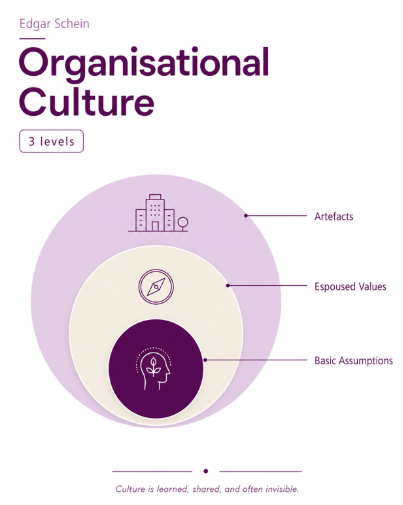
Edgar Schein’s research on organisational culture provides a useful way to understand what happens inside a team. He showed that culture is not only made up of visible behaviours or formal company values, but also of deeper assumptions that develop over time through shared experiences. In practice, this means every team develops its own unwritten rules about what is acceptable, what gets rewarded and how people are expected to behave. These unwritten rules can become more influential than the official values of the organisation because employees experience them every day.
Source: Schein, E. H., & Schein, P. A. (2017). Organizational Culture and Leadership (5th ed.). Wiley.
Schein describes culture in three layers:
- Artifacts: What people can see and hear — behaviours, language, rituals, meetings and everyday practices.
- Espoused values: What the organisation says is important — for example collaboration, customer focus, innovation or accountability.
- Underlying assumptions: The deeply embedded beliefs that ultimately determine how people actually behave.
Your corporate values might say, “Challenge the status quo.” But if an employee challenges an idea in a meeting and their manager reacts negatively, the real lesson is different: keep quiet. Over time, these repeated experiences shape the assumptions people hold about how the team really works. That is how team culture is built.
How leaders create culture: 3C model: Copy – Coach – Correct
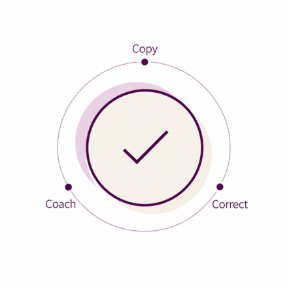
A simple way to understand culture formation is through the 3C model: Copy, Coach, Correct.
Copy
People naturally want to belong to their group. We observe others to understand what behaviour is accepted and what helps us succeed. Inside a team, employees watch their colleagues — but they watch their team leader most closely. Why? Because the team leader has influence over priorities, recognition, compensation, promotion and, in some cases, whether someone keeps their job. Employees therefore quickly learn: What does my manager really value? What behaviour gets rewarded here? And then they copy it.
Coach
Next comes feedback. When employees behave in a certain way, they receive signals from the group and especially from their team leader. How a team leader reacts sends a powerful message about what is expected. Positive feedback encourages people to repeat certain behaviours, while criticism discourages others. And when a leader says or does nothing, employees may interpret that silence as acceptance. Over time, these signals shape what becomes normal within the team.
Correct
Based on those signals, employees adjust their behaviour. Behaviours that are rewarded are repeated. Behaviours that are criticised tend to decrease. Behaviours that are consistently tolerated become part of the team norm. Over time, these repeated behaviours become the team culture.
The team leader is a multiplier
There is an old saying that “the fish rots from the head.” The same principle applies to team culture. The behaviour of the team leader has a multiplier effect.
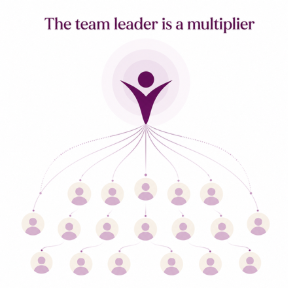
Employees observe it, copy it and use it as a signal for what is truly expected. A team leader who demonstrates trust, accountability, respect and customer focus can multiply these behaviours across the whole team. A team leader who demonstrates fear, blame, inconsistency or disengagement can multiply those behaviours just as quickly. This is why the direct team leader is so important for employee engagement. When the team leader creates a strong culture, engagement goes up. People are more likely to feel valued, contribute ideas, take responsibility and give their best. When the team leader creates a poor culture, engagement falls. People withdraw, contribute less and eventually may decide to leave.
How Skill Up Leader helps
The challenge for a CEO is scale. You cannot personally observe how every team leader leads, yet these daily interactions strongly influence engagement, culture and execution. Skill Up Leader strengthens frontline leadership while giving executives visibility without adding significant management effort. It works directly with team leaders and sends aggregated signals back to management when engagement, leadership quality or execution appears at risk. Skill Up Leader offers two solutions:
5-week leadership program
A focused program to improve everyday team leadership and employee engagement. Team leaders work on real team situations, receive personalised support and use employee feedback to strengthen the behaviours that shape culture.
Transformation Adoption Program
Designed for periods of change. It helps team leaders translate strategy into frontline action while giving executives visibility into understanding, buy-in and adoption risks. If something is not working, management can intervene early.
The principle is simple: improve the quality of team leadership at scale, while giving the executive team the signals it needs to act only where necessary. For you as CEO, the message is simple: culture is not only what your company says. Culture is what your people experience every day. And much of that experience is shaped by one person — their direct team leader.
Get that relationship right, and you create a multiplier for engagement, performance and customer focus. Get it wrong, and disengagement can spread just as quickly. The impact of the team leader therefore reaches far beyond the individual team — it directly influences how well your strategy is lived across the organisation.