
Measuring L&D success
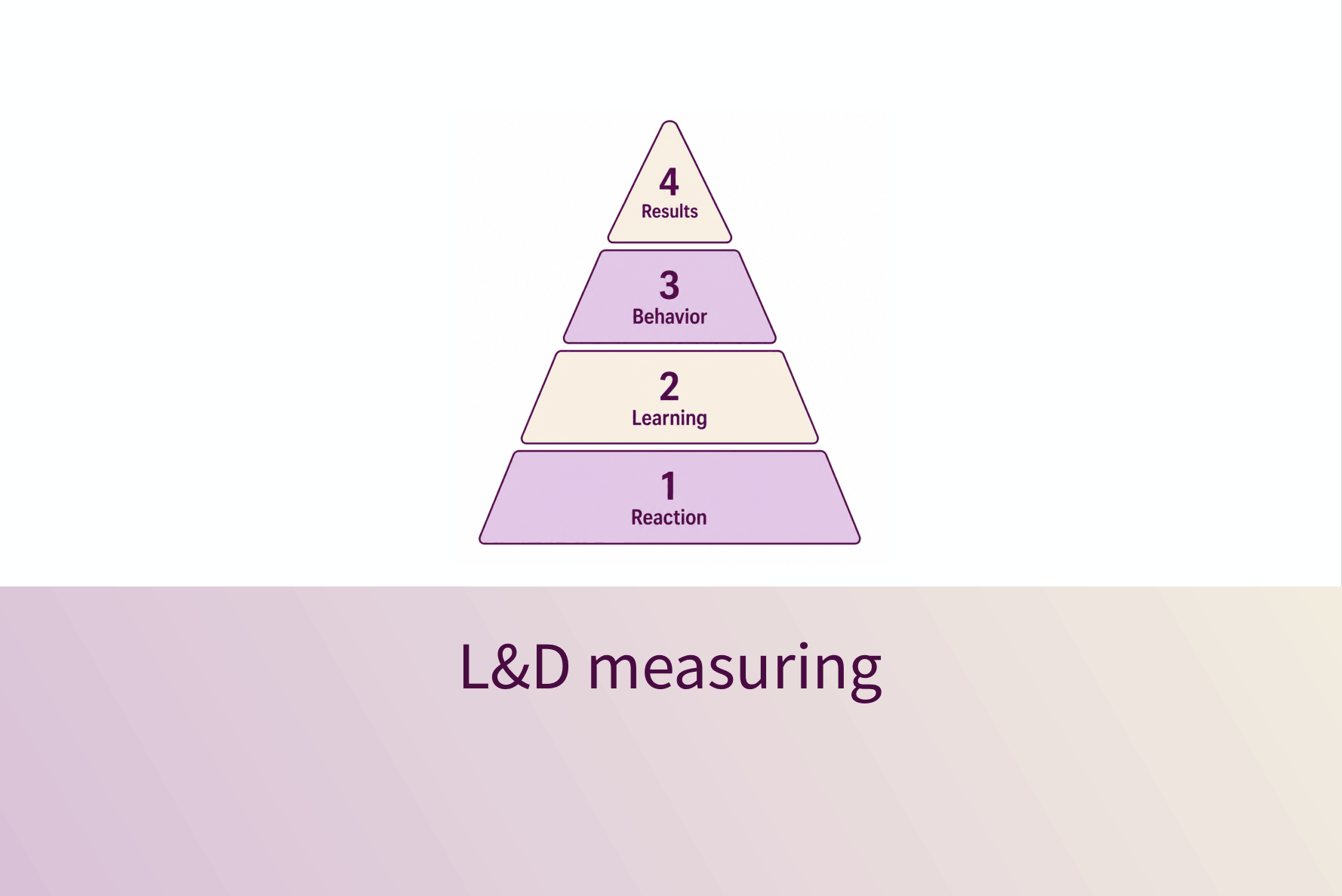
Learning and Development (L&D) is often discussed as a people initiative. As a CEO, however, you should expect more from your learning program than completion rates, attendance numbers, and positive feedback scores. Your investment in learning should ultimately contribute to business performance. That means asking harder questions: Is your learning program improving productivity? Is it helping your company increase revenue, reduce costs, retain critical talent, serve customers better, and stay relevant as your market changes?
For L&D to earn strategic influence in your company, its measurement approach must evolve. The focus needs to shift from measuring learning activity to demonstrating business impact and, wherever possible, business ROI. Measurement will not improve on its own. It takes deliberate effort, better access to business data, and stronger alignment between your L&D function and the priorities of your company. Ultimately, people across your organization will only take L&D seriously as a strategic function once the measurement problem is addressed.
To understand what is currently wrong with L&D measurement, it helps to examine the most widely used framework: the Kirkpatrick Model. Originally developed by Donald Kirkpatrick in the 1950s and later refined by his son James, the model provides a structured approach to evaluating training effectiveness. It breaks measurement down into four key levels:
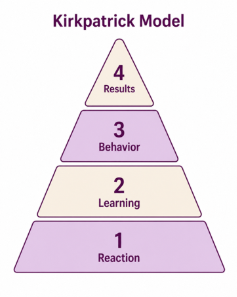
Level 1: Reaction – Measuring Learner Engagement
The first level measures how employees respond to the learning experience. Typical metrics include:
- Satisfaction surveys
- Participation and completion rates
- Time spent on learning
These numbers are useful, but they do not prove that your learning program is creating business value. Just because 1,000 employees completed a cybersecurity course does not mean your company is safer. And a 9/10 satisfaction score may simply mean the trainer was engaging. As CEO, you should see these metrics as a starting point, not evidence of impact. Continue tracking them, but expect your L&D team to go further by asking employees what was useful, what was missing, and what will help them perform better. Your employees are the customers of your learning program, but satisfaction alone is not the goal.
Level 2: Learning – Assessing Knowledge Retention
The second level measures whether employees actually gained knowledge or skills. Organizations typically use:
- Pre- and post-assessments
- Skill tests and quizzes
- Practical assignments
High scores may look impressive, but they do not automatically translate into business performance. Your sales team can score 98% on a training exam and still miss its sales targets the following quarter. As CEO, you should expect more than evidence that employees learned something. The real question is whether they can use that knowledge to improve performance. Assessments, case studies, simulations, and real business challenges should therefore help employees apply learning directly to their work.
Level 3: Behavior – Tracking Application on the Job
Level three measures whether employees are actually using their new skills in the workplace. Useful indicators include:
- Manager and peer feedback
- Workplace observations
- Performance data
- Skills assessments
This is where measurement becomes more interesting from a CEO perspective. You are no longer measuring whether employees completed a course; you are measuring whether capabilities inside your company are actually improving. To make this visible, your company should identify the skills required for current and future roles, establish employees’ starting skill levels, and measure improvement over time. These improvements should also be captured in your HR systems. That creates evidence that your workforce is becoming more capable. But as CEO, you need to take the next step: What does that improved capability mean for your business?
Level 4: Results – Measuring Business Impact
This is where your learning program ultimately needs to aim. Level four connects learning to measurable business outcomes such as:
- Revenue growth
- Productivity improvements
- Cost savings
- Customer satisfaction and retention
- Employee retention
- Reduced business risk
- Faster time to market
- Profitability
At this level, the question is no longer whether employees enjoyed the learning or improved their skills. The question is: What business result improved because your company invested in developing these capabilities? And ultimately: Was the value created greater than the investment?
As CEO, this is where L&D becomes strategically relevant. A sales program should connect to sales performance. Leadership development should connect to retention, engagement, or team performance. AI training should contribute to productivity, innovation, cost reduction, or better customer experiences. Not every business result can be attributed entirely to L&D, but your learning team should be able to show its contribution. That is how your learning program moves from being seen as a cost to becoming an investment in profitability, growth, and your company’s ability to remain relevant to future customers.
Where Skill Up Leader Fits
Skill Up Leader is designed to move beyond traditional learning metrics and focus on the areas that matter most to you as CEO: Level 3: Behavior and, increasingly, Level 4: Business Results. Its two solutions address different business challenges:
5-Week Leadership Program
Frontline and middle managers receive personalized AI coaching around real challenges in their teams, practise leadership situations through simulations, and apply new behaviors directly at work. Anonymous employee feedback before and after the program measures whether employees actually experience an improvement in leadership. Executives then receive aggregated insights into leadership change, engagement, recommended actions, and ROI.
Transformation Adoption Program
Designed for transformations such as AI adoption, restructuring, new operating models, workforce transformation, or M&A integration. Frontline leaders work through the actual change with an AI coach, address concerns within their teams, practise how to communicate the transformation, and commit to concrete actions. Executives receive visibility into adoption, alignment, readiness, and execution risks—helping you identify where a transformation may be getting stuck before this affects business performance.
For you as CEO, the important distinction is that the focus does not stop at knowledge transfer. It asks: What are leaders doing differently, and is that change improving execution? That places the core of both programs at Level 3. When those behavioral changes contribute to stronger engagement, adoption, productivity, retention, customer outcomes, or profitability, the organization starts moving toward Level 4.
From Learning to Business Impact
In the past, L&D often operated as an order-taker: the business requested training, and L&D delivered it. That is no longer enough. As CEO, you should expect your learning function to start with the business problem, not the course. Before investing in a program, your company should be able to answer:
- What business outcome are we trying to improve?
- Which skills or behaviors need to change?
- How will we measure the impact?
- What return do we expect from the investment?
This shifts L&D from delivering training to building the capabilities your company needs to perform, grow, and stay competitive. Your workforce must keep pace with changing technology, customer expectations, and business models. If it cannot, the impact will eventually show up in productivity, revenue, margins, and market relevance. When your company can connect learning to behavior, business results, and ultimately ROI, L&D becomes more than a support function. It becomes an investment in profitability, future growth, and your ability to remain relevant to customers. Let’s get to work.