
How Mature Is Your Learning & Development Function?
The skills your company needs are changing faster than ever. New technologies, AI, evolving customer expectations, and changing business models are continuously reshaping how companies compete—and shortening the useful life of many existing skills.
For you as a CEO, this makes Learning and Development (L&D) increasingly important. Your company’s ability to execute its strategy depends not only on the capabilities you have today, but on how quickly your organization can build the capabilities it will need tomorrow. A strong learning function can help your company adapt faster, close critical skill gaps, improve performance, and remain relevant to customers. But not every L&D function is equipped to play that role.
In many organizations, learning is still primarily focused on compliance, courses, and participation. In others, L&D has evolved into a strategic capability closely connected to business priorities, transformation, and measurable outcomes.
The first step is understanding where your company is today.
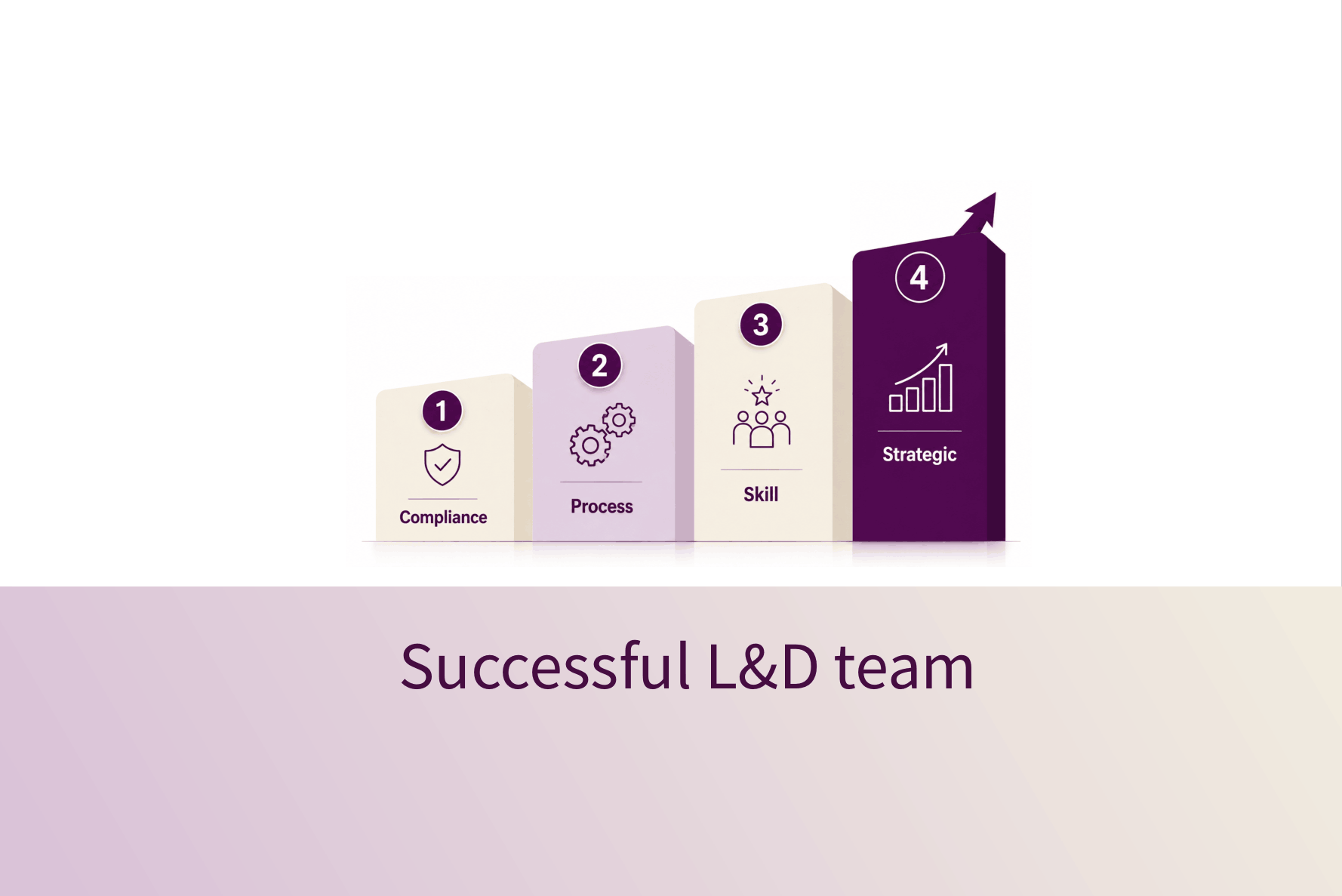
Skill Up Leader's L&D Maturity Framework provides a structured way to assess the current maturity of your learning function and identify where it needs to evolve. The framework distinguishes four levels:
- Level 1 — Compliance-driven necessity
- Level 2 — Process-driven cost center
- Level 3 — Skill-driven department
- Level 4 — Strategically relevant department
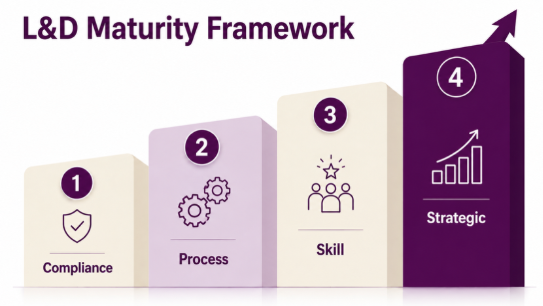
Moving up the maturity curve means shifting the focus from delivering training to building the capabilities your company needs to execute its strategy, improve profitability, and stay competitive and relevant to customers.
L&D Maturity Framework: Where Is Your Company Today?
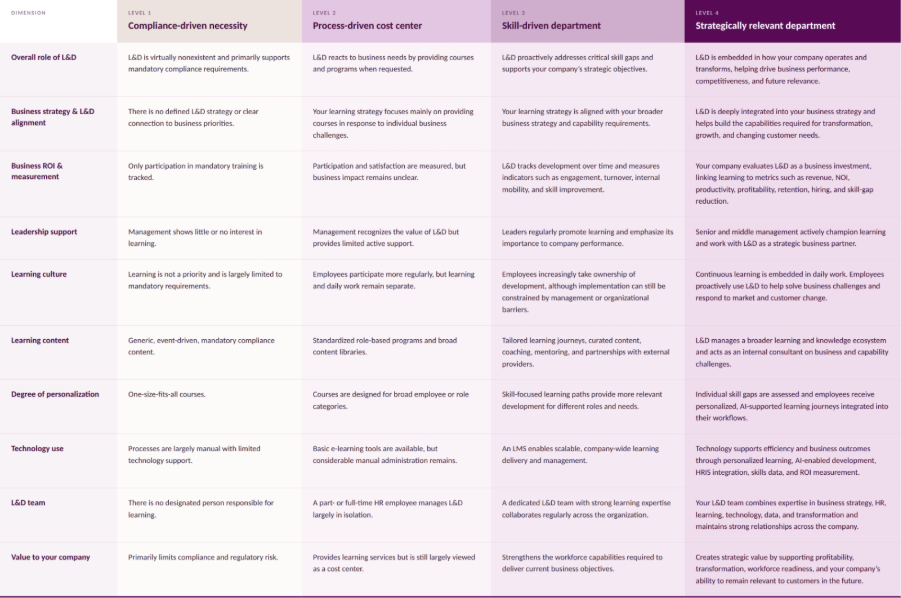
What Does Your L&D Maturity Tell You?
The framework is not about reaching Level 4 for its own sake. It gives you a way to identify whether your current learning capabilities are sufficient for where your business is heading. For a CEO, the most important question is whether your L&D function is helping your company:
- Build critical skills faster than they become obsolete
- Execute current and future business strategy
- Improve productivity, profitability, and business ROI
- Adapt to new technologies and market changes
- Stay relevant as customer needs evolve
If your business environment is changing faster than your organization can develop new capabilities, that gap will eventually become a business constraint. Understanding your current L&D maturity gives you a starting point for closing it. Where is your company today—and where does your learning function need to be to support the business you want to become?