
The Future of L&D: From Learning Programs to Business Performance
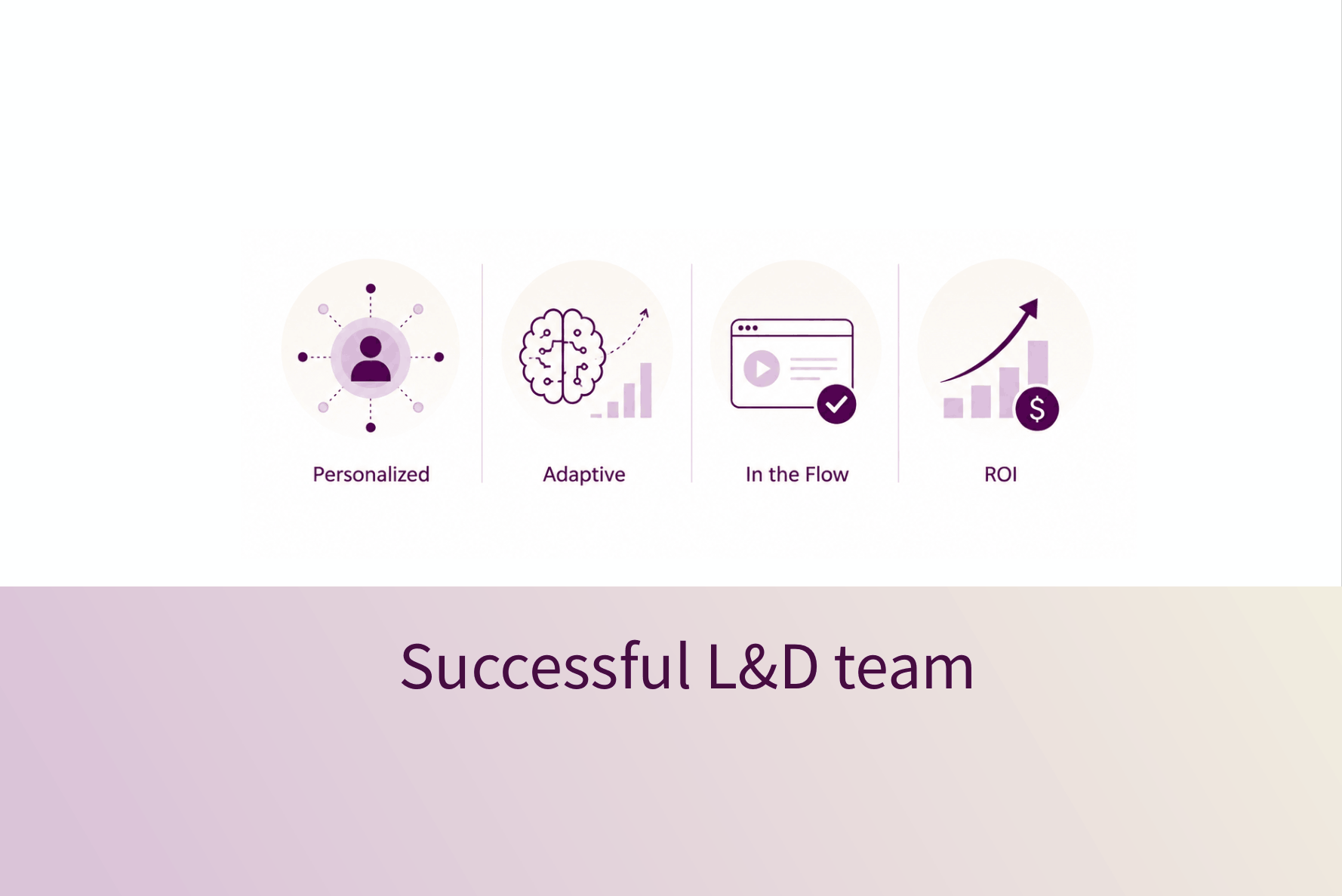
As a CEO, you are not investing in Learning & Development simply to give employees more training. You are investing in your company’s ability to execute its strategy, remain profitable, adapt to change and continue creating value for customers.
That is why the future of L&D cannot be measured primarily in training hours, course completions or participation rates. Your learning program needs to answer a more important question: Does it improve the performance of your company? The future of L&D will be shaped by three fundamental shifts.
1. Personalization at Scale
The traditional one-size-fits-all approach to corporate learning is reaching its limits. Your employees have different roles, capabilities, challenges and development needs. Giving everybody the same content is neither efficient nor particularly effective. The future is personalized learning at scale: learning journeys tailored to the employee’s role, skills gaps, development needs and career aspirations. Adaptive approaches can continuously adjust the experience according to the individual’s progress, context and needs. AI makes this level of personalization economically possible across much larger employee populations.
For you as CEO, the benefit is significant: your company can concentrate development on the capabilities that actually need to change instead of spending budget on generic training.
2. Learning Moves Into the Flow of Work
Your employees do not necessarily need more courses. They need the right support when they are facing a real problem. That means moving away from long, knowledge-heavy programs toward:
- Microlearning and short interventions
- Just-in-time support
- Learning based on real business situations
- Practice and simulation
- Immediate application in daily work
The distinction is important. Knowing how to give feedback is not the same as having a difficult feedback conversation with an employee. Understanding change management theory is not the same as getting your team to support a major transformation. The future of L&D therefore focuses less on knowledge consumption and more on behaviour, application and performance.
3. L&D Must Demonstrate Business ROI
Your learning investment competes for capital with every other investment in your company. It therefore needs a credible connection to business outcomes. Ask what your learning program changes:
- Does productivity increase?
- Are leaders more effective and accountable?
- Does employee engagement improve?
- Can strategic initiatives be implemented faster?
- Can you reduce unwanted turnover, absenteeism or execution problems?
- Does the organization respond faster to changes in technology and customer expectations?
Learning metrics still have a role. But completion rates alone do not tell you whether your investment generated value. For CEOs, the ultimate purpose of L&D is stronger execution that contributes to profitable, sustainable growth and keeps the company relevant to its customers.
Skill Up Leader: Turning These Principles Into Execution
This is precisely where Skill Up Leader fits into the future of L&D. Skill Up Leader positions itself as the bridge between executive strategy and frontline execution. Rather than relying primarily on standardized courses, its conversational AI combines personalized development, practical application and executive-level insights. The approach brings several future-of-L&D principles together: coaching is personalized around real leadership challenges and employee feedback; interactions are short enough to fit around daily work; managers practise realistic situations and then apply what they learn with their teams; and executives receive aggregated data and recommendations showing where improvement and execution risks exist. Skill Up Leader offers two solutions addressing different business needs:
5-Week Leadership Program
The 5-week AI leadership program develops frontline and middle managers through personalized AI coaching and realistic leadership simulations. Each participating leader spends around 2.5 hours in total, including three tailored coaching sessions and nine simulations, while applying the learning directly in daily work. Anonymous employee check-ins before and after the program help personalize development and measure progress. At the end, executives receive an engagement and ROI report with recommendations for further action.
Transformation Adoption Program
The Transformation Adoption Program addresses another major CEO challenge: ensuring that strategic change actually reaches the workforce. It can support initiatives such as AI adoption, workforce transformation, restructuring, new operating models or strategy changes. Frontline leaders engage with personalized AI coaching around the actual transformation, while executives receive aggregated insights into readiness, concerns and potential execution risks.
The CEO Question Has Changed
The future of L&D is not about delivering more content. It is about creating the capabilities and behaviours your company needs to execute today while continuously preparing the organization for tomorrow. Personalization at scale makes development more relevant. Learning in the flow of work turns knowledge into action. Better measurement connects development with business performance. And continuous capability building helps your company adapt as technology, competition and customer expectations change. Skill Up Leader brings these elements together by connecting personalized development with frontline execution and executive insight. Its 5-week program strengthens the leadership capability your organization needs every day; its Transformation Adoption Program applies the same philosophy when your business needs to change. As CEO, the question you should therefore ask is no longer: “How much learning are we providing?” It is: “Is our learning investment changing how our people perform, helping us execute our strategy and creating a measurable return for our business?” That is where the future of L&D begins.