
Your EVP Is a Business Investment — Not an HR Program
As CEO, you are accountable for growth, profitability and the future relevance of your company. None of these outcomes are possible without the people who create value for your customers.
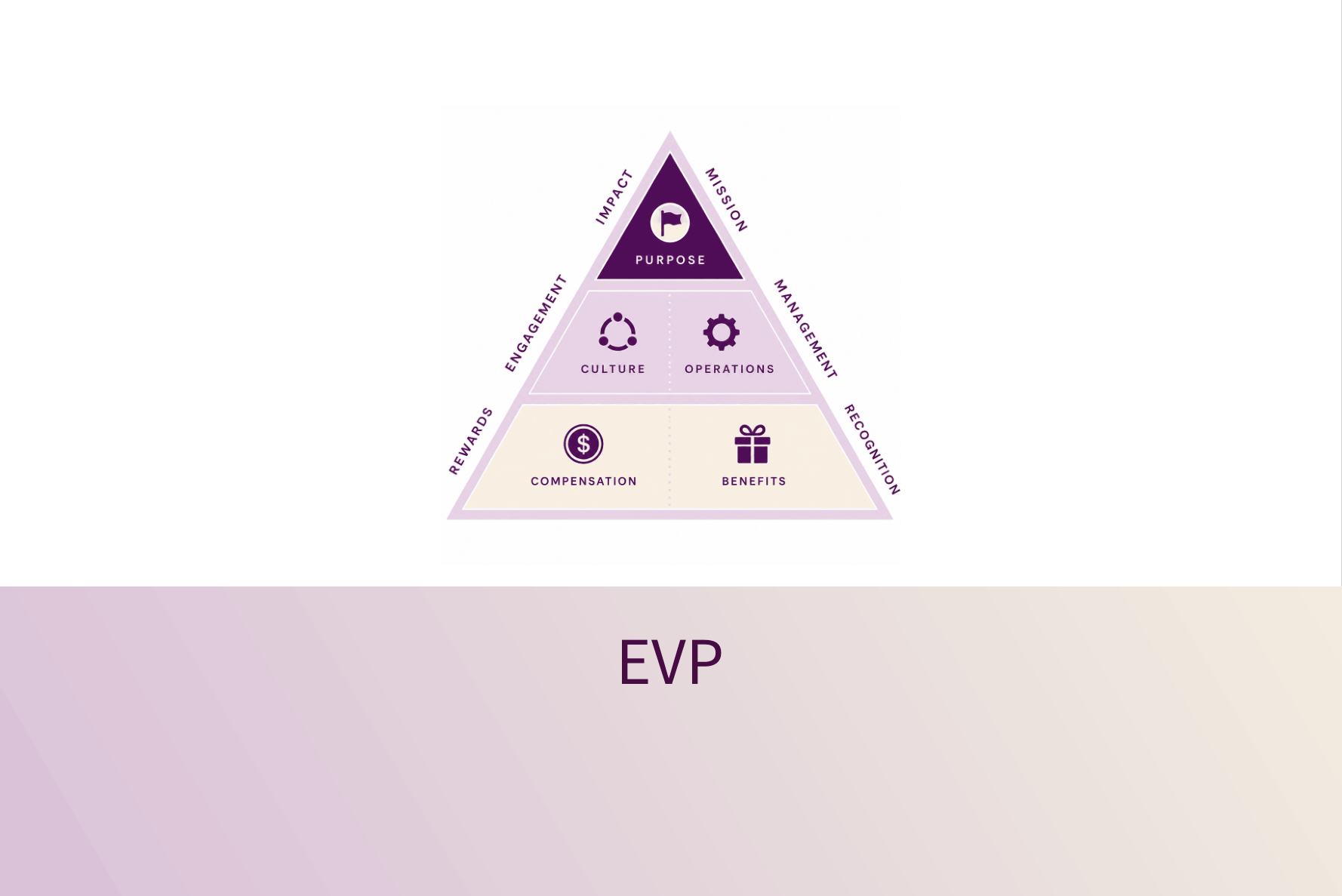
Your Employee Value Proposition (EVP) is therefore a business issue. It is one of the key factors influencing employee engagement and answers three critical questions: Why do people join your company? Why do they stay? And why do they perform at their best? For our approach, we use the Mercer EVP model. Mercer is a leading global consulting firm specializing in people, rewards, talent and organizational strategy. We use the Mercer framework because it provides a clear, business-relevant way to look at the complete employee value exchange — from compensation and benefits to careers, well-being and ultimately purpose.
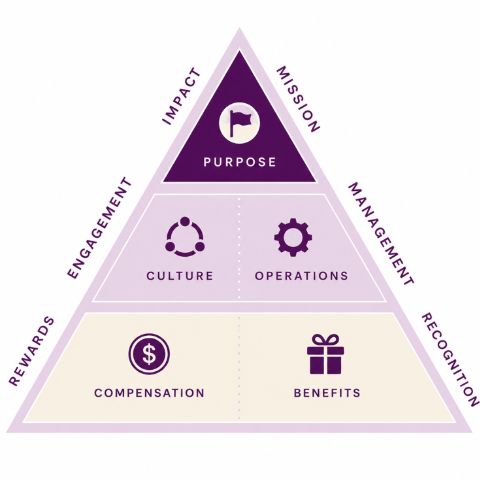
Source: Mercer: https://www.brightmine.com/us/resources/talent-management/talent-acquisition/recruitment/employee-value-proposition/
1. Compensation — Are you rewarding the value that matters?
Top performers expect competitive and fair compensation, but simply paying more does not automatically create higher performance. Your compensation strategy should reinforce the behaviors, capabilities and outcomes your business needs most. The CEO question is: Are we rewarding contribution that drives customer value, growth and profitability? Compensation delivers ROI when it helps you attract critical talent, retain high performers and focus effort on the priorities that move your business forward.
2. Benefits — Are your investments valued by employees?
Benefits represent a significant investment, but value is only created when employees actually value what you provide. A strong benefits proposition supports security, health and different life stages. Ask yourself: Are we investing in benefits because we have always offered them, or because they meaningfully improve attraction, retention and performance? Your objective is not to offer everything, but to invest where employees and your business see the greatest value.
3. Careers — Can your best people build their future in your company?
For top performers, career opportunity is a powerful reason to stay. They want challenging work, greater responsibility and continuous development. This makes your learning program a strategic business investment, not a catalogue of courses. Are you developing the capabilities your strategy will require in three to five years? Does your learning program help employees remain relevant as AI, technology and customer expectations evolve? Can ambitious people see a future in your company, or do they need to leave to grow? The ROI of learning comes from turning stronger capabilities into productivity, innovation, internal mobility and greater customer value.
4. Well-being — Does work work for them?
Top performance cannot be built on permanent overload. A powerful question for your organization is: Does work work for your people? Well-being is not only about health initiatives or benefits; it is about whether the way work is designed enables people to perform and thrive. Do employees have the right level of autonomy, flexibility, leadership support and psychological safety? Can they deliver results without sacrificing their ability to sustain performance over time? Poor well-being translates into absence, disengagement, turnover and lost productivity. The objective is not simply happier employees — it is to create an environment where work works for them, so they can consistently do their best work for your customers and your business.
5. Purpose — Why should your best people give you their best?
Purpose sits at the top of the Mercer EVP pyramid. Top performers want to understand why their work matters, who benefits from it and what they are helping to build. Purpose becomes a business advantage when employees can connect their work → your strategy → customer value. It gives people direction, strengthens decision-making and creates a reason to contribute beyond the minimum required. Purpose is also closely connected to future relevance: when your people understand the value your company exists to create for customers, they are better positioned to innovate and adapt as those customers' needs change.
From EVP to measurable engagement with Skill Up Leader
A strong EVP only creates business value when employees actually experience it in their daily work. This is where Skill Up Leader fits in. The platform focuses on the execution gap between executive intent and frontline reality, using AI-based leadership development, employee listening and executive reporting to improve engagement and make progress measurable. The key difference is that Skill Up Leader does not only ask employees how engaged they are. It combines feedback with targeted leadership action and then gives the executive team concrete, aggregated data on where engagement, leadership and adoption can improve. The 5-week program measures employee engagement before and after the intervention, while the transformation adoption program provides executives with signals on readiness, alignment and execution risk.
5-week leadership program
The program develops frontline and middle managers through personalized AI coaching and leadership simulations. Employee check-ins before and after the program help identify development priorities and measure change. The executive team then receives an engagement report, practical recommendations and ROI analysis. Skill Up Leader reports an average engagement improvement of 4% across its tested customers, with many clients seeing improvements in the 3–10% range.
Transformation adoption program
Transformation is one of the moments when engagement and purpose are most at risk. Whether you are introducing AI, restructuring, changing your operating model or executing a new strategy, employees need to understand the change, believe in it and know what it means for their work. Skill Up Leader helps frontline leaders translate executive strategy into daily behavior while giving executives early visibility into adoption risks and concrete recommendations on what to adjust.
From EVP to action with Skill Up Leader
A strong EVP only creates business value when employees can evaluate how they experience it and act on what they see. This is where the Skill Up Leader 5-week program fits. The program starts at the frontline, where the employee experience actually happens. Employees and leaders evaluate the factors that influence engagement, identify what is working and what needs to improve, and take practical action within their teams. This creates a bottom-up solution rather than another top-down HR initiative.
The insights are then aggregated and brought to management. Management does not have to fix every issue itself: teams address what they can at the frontline, while management focuses on the systemic issues that require top-down decisions, resources or investment. For the executive team, the result is better engagement, stronger leadership and concrete data on what to improve, with less management effort and a clearer connection between employee experience, action and business performance.
The CEO question: What return does your EVP create?
Your EVP should contribute to stronger attraction and retention of critical talent, higher performance, future-relevant capabilities, lower unwanted turnover, stronger innovation and customer value, and ultimately greater productivity and profitability. The goal is not to create the most generous EVP. It is to create the most relevant EVP for the people and capabilities your strategy depends on. And this brings us back to employee engagement. Engagement is not created by one initiative. It is the outcome of employees experiencing the right combination of reward, support, opportunity, well-being and purpose. The real advantage comes when your organization can continuously evaluate those factors, understand where the employee experience is breaking down and act on the insight.
Employees do not evaluate your EVP in isolation. They compare it — consciously or unconsciously — with the EVP of other employers. That comparison influences whether they join your company, stay with you, move elsewhere, or decide to give you their best. In a competitive talent market, your EVP is therefore not only an internal people proposition; it is part of how your company competes. That is where the Mercer framework and Skill Up Leader fit together particularly well: Mercer provides a clear framework for what employees value, while Skill Up Leader’s 5-week program helps your people evaluate how those factors are actually experienced and act on what needs to improve. The result is not simply another engagement score. It is a more actionable view of engagement — one that gives employees a voice, leaders a responsibility to act and the executive team concrete data about what to improve next.
When your EVP gives your best people compelling reasons to join, stay and perform, and your organization has the ability to continuously improve that experience, engagement becomes more than an HR metric. It becomes a driver of execution, customer value, profitability and your company’s future relevance.