
Ebbinghaus Forgetting Curve
Understanding how people learn matters at CEO level because capability directly affects execution, productivity, profitability, and your company’s ability to stay relevant to customers. Your learning program should therefore be viewed as a business investment—not simply an HR initiative. The key question is not whether training is delivered, but whether employees retain and apply what they learn in ways that improve performance.
The Foundation of Human Learning
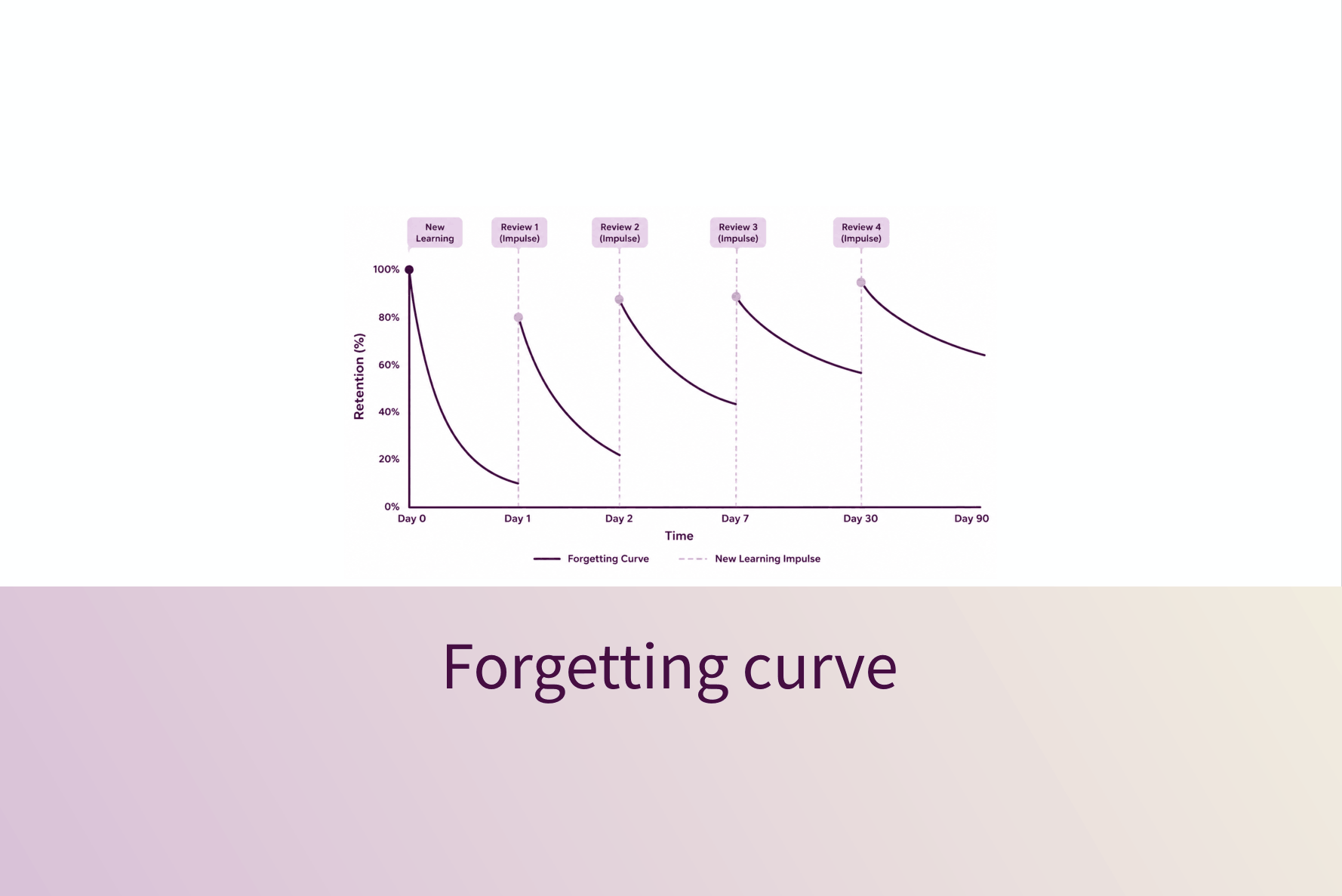
The Ebbinghaus Forgetting Curve illustrates how quickly newly learned information can fade when it is not reinforced. Immediately after learning, retention is high. But memory declines rapidly, particularly in the first hours and days. Over time, the rate of forgetting slows, but a significant part of the original knowledge may already have been lost. This is where reinforcement changes the curve. Each time employees revisit, recall, practise or apply what they have learned, the memory becomes stronger and knowledge can be retained for longer.
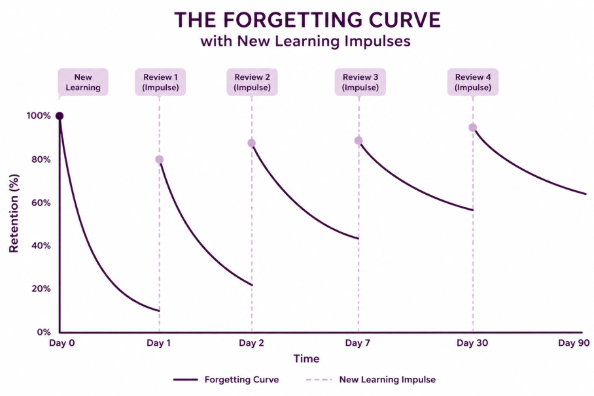
This is the principle behind spaced learning: rather than concentrating development into a single training event, important knowledge and skills are revisited over time. Research also shows that actively retrieving knowledge strengthens long-term retention more effectively than simply reviewing the same material. For your company, the implication is important. A one-off training event may create awareness, but awareness is not the same as capability. If employees cannot remember or apply what they learned when it matters, the business return on that investment is limited.
Your learning program should therefore:
- Reinforce critical knowledge over time, rather than relying on one-time events.
- Create opportunities to practise and apply it, making learning more durable.
- Connect development to real business priorities, so learning improves execution.
- Measure impact, including changes in leadership behaviour, engagement, productivity and business performance.
Skill Up Leader provides a practical example of how these principles can translate into leadership development. While the program is not presented as an Ebbinghaus-based methodology, its five-week structure reflects the same underlying idea: leadership capability is developed over time rather than in a single training event. Leaders work through personalised development connected to the real challenges they face, while companies can build more consistent leadership behaviours and gain greater visibility into development needs.
For you as CEO, this is the important shift: from delivering learning to building capability that supports execution. The objective is not more training. It is stronger, more durable capability—and a workforce better equipped to execute your strategy.