
Bloom’s Taxonomy: Turning Learning Into Business Performance
For your company, learning should be more than an employee benefit or an HR initiative. It is an investment in capability—and, like every investment, it should ultimately contribute to better execution, stronger profitability, and your ability to remain relevant to customers in the future.
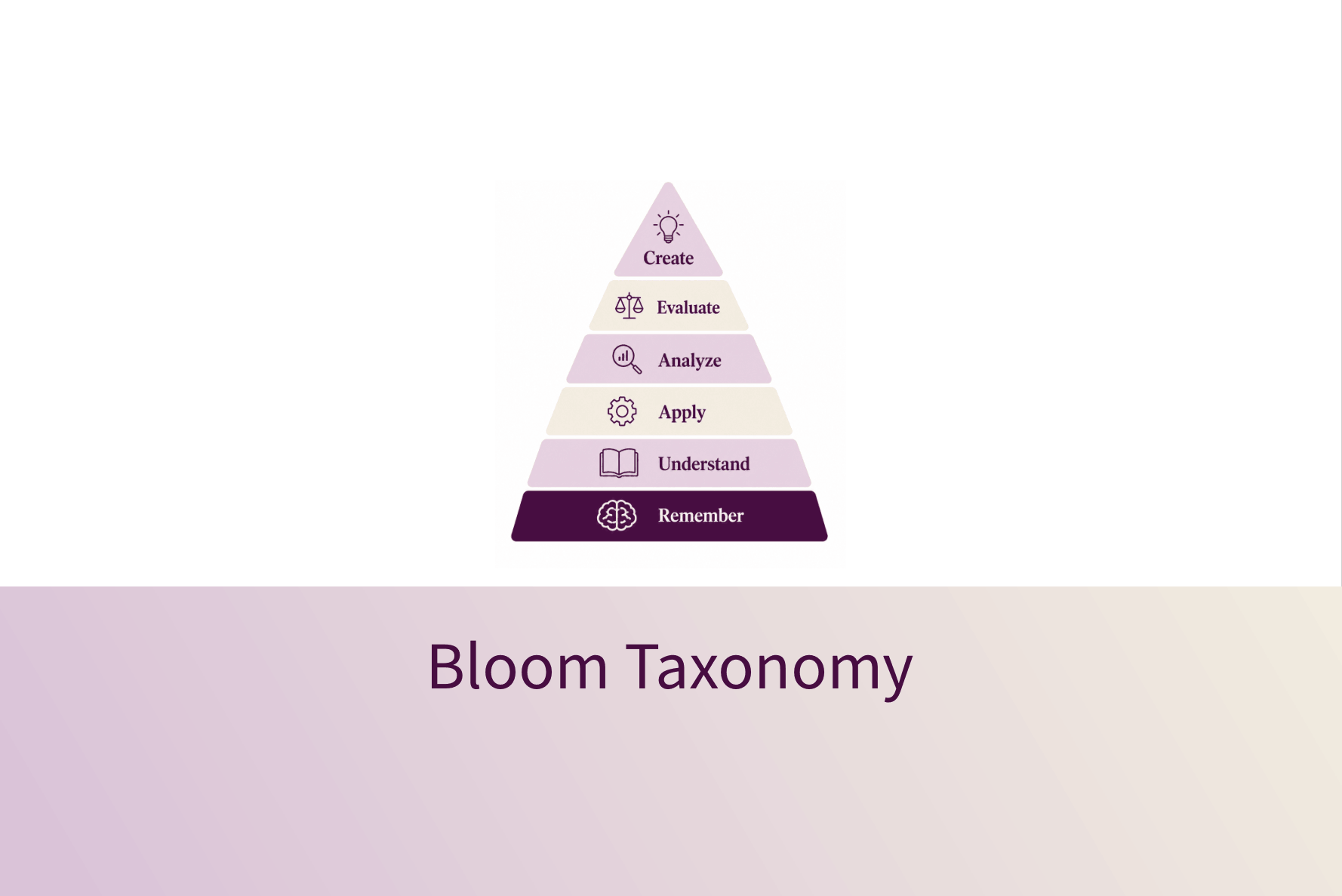
Most learning activities contribute to development, but there is an important difference between knowing something and being able to use it effectively at work. Bloom’s taxonomy provides a useful way to understand this progression. It moves from Remember and Understand to Apply, Analyze, Evaluate and Create. For you as a CEO, the higher business value starts when learning moves beyond knowledge acquisition and begins to influence decisions, behaviour and execution.
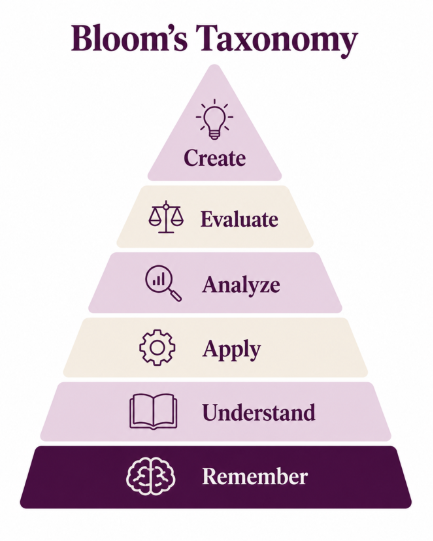
1. Foundational learning — Remember & Understand
At this level, employees mainly acquire and recall information. Examples include:
- Rereading training materials
- Listening to recordings or presentations
- Highlighting important information
- Repetitive review
- Answering knowledge-based questions
These activities are useful for building a foundation. Your employees first need to understand a concept before they can use it. But understanding alone does not necessarily improve business performance. A manager can, for example, know the principles of giving feedback without being able to successfully handle a difficult feedback conversation with an employee.
2. Active learning — Apply
At the Apply level, employees start using what they have learned. This can include:
- Solving realistic problems
- Practising conversations and scenarios
- Applying concepts to current work situations
- Testing different approaches
- Receiving feedback and adjusting behaviour
This is an important step for your learning program because learning becomes connected to execution.The question changes from “Does the employee understand it?” to “Can the employee actually do it?”
3. Higher-level learning — Analyze, Evaluate & Create
At the next level, employees examine situations, recognise patterns and adapt their approach to the context. Examples include:
- Analyzing why a team or business problem is occurring
- Comparing different possible approaches
- Connecting new knowledge with previous experience
- Reflecting on the consequences of decisions
- Adapting behaviour to a specific employee, customer or business situation
- Developing new solutions
For your company, these capabilities are increasingly important. Markets, technology and customer expectations change quickly. Staying relevant requires employees and leaders who can do more than repeat established processes. They need to interpret changing situations and respond effectively.
Where Skill Up Leader Fits: Apply and Analyze
This is where Skill Up Leader fits within Bloom’s taxonomy. Rather than focusing primarily on passive learning, Skill Up Leader is designed around Apply and Analyze. Its two solutions connect learning and development directly to the real leadership and business challenges your organization needs to solve.
1. 5-Week Leadership Development Program
The 5-week Leadership Development Program helps your frontline and middle managers strengthen practical leadership capabilities and employee engagement. Managers work with personalized AI coaching focused on their actual leadership situations and practise realistic leadership scenarios. This operates at the Apply level because your managers practise leadership behaviours and use them in their everyday work. It also reaches the Analyze level because managers reflect on their teams, leadership challenges and possible approaches before determining how to act. For you as CEO, the objective is not simply to have managers complete leadership training. It is to create more capable and accountable leaders who can translate your priorities into daily execution across the organization. Skill Up Leader also provides aggregated organizational insights into leadership and engagement patterns, giving management greater visibility into where development may be required.
2. Transformation Adoption Program
The Transformation Adoption Program applies the same principle to a specific strategic change. It is designed for transformations such as AI adoption, restructuring, M&A integration, new operating models, workforce transformation or major strategic shifts. The objective is to help frontline leaders understand, support and lead the change while giving your executive team earlier visibility into adoption risks. Here, Apply means that leaders translate your transformation strategy into conversations, decisions and actions with their teams. Analyze means understanding employee reactions, identifying barriers to adoption, recognizing execution risks and determining how to respond in the specific context of the team. This matters because announcing a transformation is very different from successfully implementing one. Your strategy only creates value when people across the organization understand it, adopt it and change how they work.
From Learning ROI to Business ROI
For you as CEO, this is ultimately where the value of learning should be measured. Instead of asking only how many people completed a training program, ask:
- Are our leaders applying what they learn?
- Is their behaviour changing?
- Are they improving employee engagement and execution?
- Is our transformation actually being adopted?
- Can we identify execution problems before they affect customers or profitability?
- Are we building the capabilities required to remain competitive in the future?
Skill Up Leader’s two solutions address these questions from different directions. The 5-Week Leadership Development Program builds the leadership capability your organization needs for continuous execution, while the Transformation Adoption Program mobilizes that capability around a specific strategic change. Both are designed to connect frontline leaders with executive priorities and provide management with greater visibility into execution. The important principle behind Bloom’s taxonomy is therefore highly relevant for CEOs:
Business value does not come from what your organization knows. It comes from how effectively your people can apply and analyze that knowledge to improve execution, serve customers and deliver profitable growth.