
The 70-20-10 Learning Model: Turn Learning into Business Performance
As a CEO, you do not invest in learning simply to offer more courses. You invest because your company needs to perform, grow profitably, adapt faster than competitors, and stay relevant to customers in the future.
This is why the 70-20-10 model of learning and development remains highly relevant. The framework suggests that leadership development comes primarily from three sources:
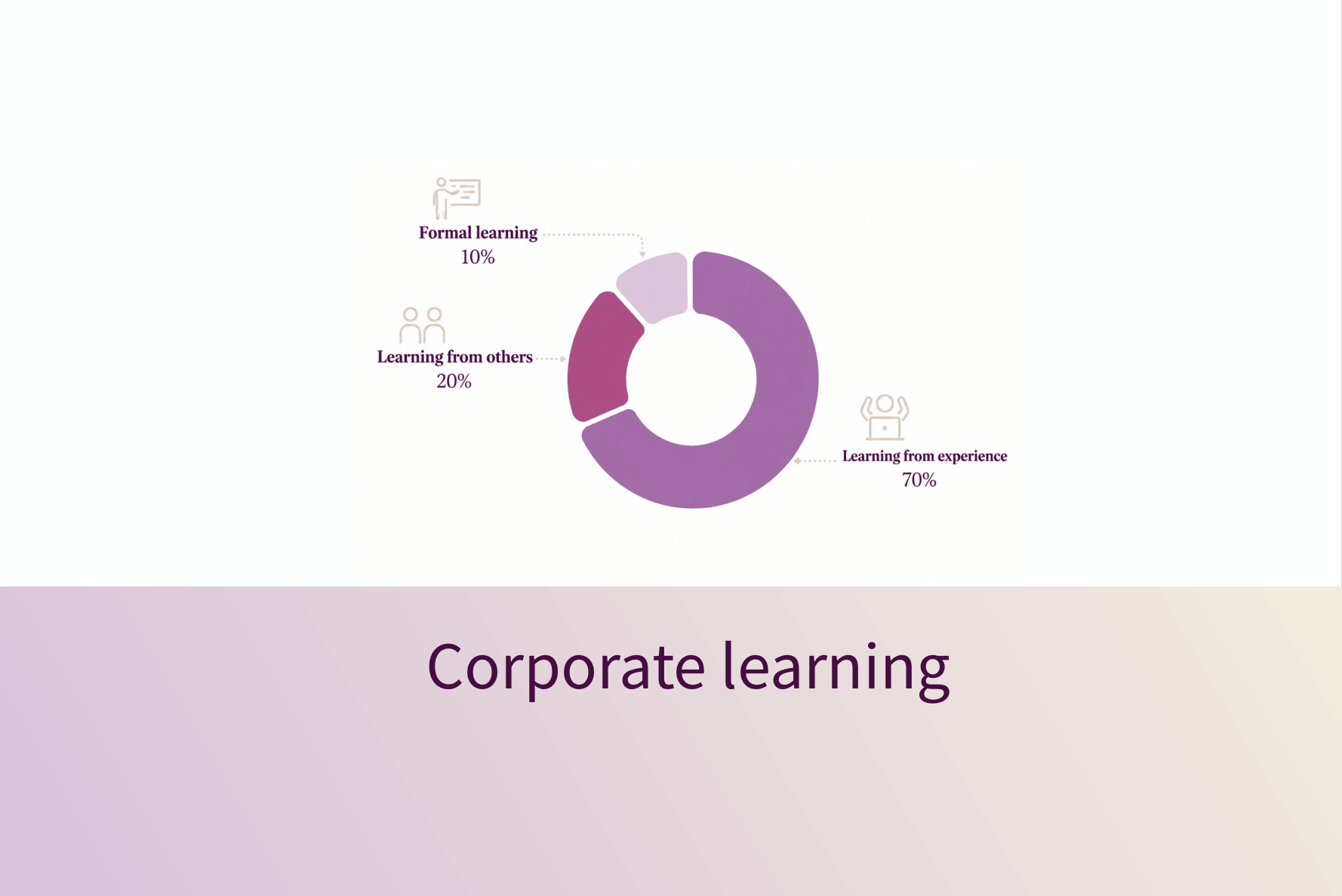
- 70% through experience – solving real problems, taking responsibility, making decisions, and learning while doing the job.
- 20% through others – coaching, feedback, managers, colleagues, mentors, and collaboration.
- 10% through formal learning – courses, workshops, theory, and structured training.
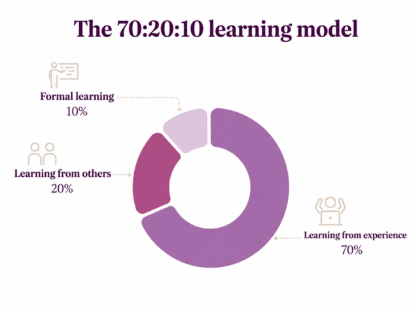
The Center for Creative Leadership describes 70-20-10 as a guideline built around challenging experiences, developmental relationships, and formal coursework—not as a rigid formula. For your company, the important message is simple: learning creates value when it changes what people do at work.
Move learning closer to business results
Traditional learning often concentrates heavily on the 10%: courses, content, workshops, and certificates. These can provide important knowledge, but knowledge alone does not improve profitability. The 70% is where learning meets execution. Your managers need to apply new skills while dealing with actual employees, customers, operational problems, strategic priorities, and change. This makes learning directly connected to the challenges your company needs to solve. A strong learning strategy should therefore contribute to:
- higher productivity and execution speed,
- stronger leadership and accountability,
- higher employee engagement,
- faster adoption of strategic change,
- better customer experiences,
- reduced execution risks,
- and ultimately stronger profitability and business ROI.
The CEO question should not simply be: “How many people completed the training?” It should be: “What changed in our business because people learned?”
How Skill Up Leader brings the 70% to life
This is where Skill Up Leader fits particularly well into the 70-20-10 model. Rather than separating learning from work, Skill Up Leader focuses its AI coaching on the real challenges frontline leaders are facing and turns these conversations into practical actions in their teams. The platform is designed around real leadership and business challenges rather than passive content consumption. This puts the strongest emphasis on the 70%: learning through real work and real business challenges, while AI coaching, feedback, and reflection support the 20%. Skill Up Leader offers two solutions:
5-Week Leadership Program
The program develops frontline and middle managers around challenges they are actually facing with their teams. Leaders receive personalised AI coaching, practise realistic leadership situations, and then apply what they have learned in their daily work. Skill Up Leader specifically requires participants to put coaching discussions into practice, helping turn new leadership behaviours into habits. Employee feedback before and after the program helps make the resulting development visible. In 70-20-10 terms: leaders are not learning leadership away from the job—they are improving leadership while doing the job.
Transformation Adoption Program
The Transformation Adoption Program applies the same principle to business change. Whether your company is implementing AI, restructuring, introducing a new operating model, transforming the workforce, or executing a new strategy, frontline leaders work on the actual transformation happening inside your business. AI coaching helps them understand the change, identify concerns within their teams, practise communication, and commit to concrete actions. Executives receive aggregated insights into readiness and execution risks so they can adjust the transformation where necessary. In 70-20-10 terms: transformation itself becomes the learning environment. Your people learn how to lead change by actively leading the change.
From learning investment to business impact
For CEOs, this is the real potential of 70-20-10. Your learning program becomes more valuable when development is connected to the work your company already needs to accomplish. The 10% can provide knowledge. The 20% can provide guidance and feedback. But the 70% turns learning into action, execution, and results. That is where corporate learning can contribute to ROI, profitability, stronger strategy execution, and your company's ability to remain relevant to customers in the future.